By Ben Harmon
On July 3rd, 1967 the first 1 oz Krugerrand rolled through the presses in the South African Mint. This was not the beginning of the Gold Krugerrand, however- nor were the careful planning meetings of the Chamber of Mines of South Africa (who interestingly enough can trace its roots back to 1889) which lead to its creation. Witwatersrand, South Africa or the "ridge of white waters" in Afrikaans, is truly where Gold Krugerrand history starts. These mineral rich hills run east to west near Johannesburg for over sixty miles. They produce many minerals including uranium- and in 1884 the first gold discovery was made. The president of the Transvaal at that time was Paul Kruger, who knew that the gold discovery would forever change the face of South Africa. As he predicted, the rich gold find brought in many foreign miners looking to make their fortune. As more and more foreigners entered, they eventually began to outnumber the Boers, and their protests for their rights lead to increasing levels of conflict. Underlying this concern for their rights, was the British desire to control gold rights.


The second Boer war started in 1899 with ultimatums from the British demanding equal rights for the uitlanders (foreigners), and Kruger's response for the British to be out of Transvaal in 48 hours. After three bloody years, the war ended in 1902 and Transvaal was absorbed into the British empire- with some concessions to the Boers.
 Now that the drums of war were silent, the next milestone in the timeline of Krugerrand history was the creation of the of a centralized refinery. The Transvaal Chamber of Mines created the Rand Refinery in 1920 with the express goal to refine all the gold mined in Witwatersrand. To this day, the blank every South African Gold Krugerrand is stamped on comes from the Rand refinery.
 Now to assemble the essential elements of a One Ounce Krugerrand. First on the reverse side of the coin, we have a Springbok antelope, designed by Coert Steynberg. The antelope symbolizes South Africa. Next the Krugerrand honors the 5th President of the South African Republic, Paul Kruger with a picture on the obverse. Finally, the name itself is derived by adding Kruger's name to the national currency- the Rand. And where did the Rand come from? Witwatersrand of course.
With Executive Order 6102 and the Trading with the Enemy Act of 1917, United States citizens were effectively barred from owning gold bullion. In 1967 the Chamber of Mines of South Africa had a clever plan for their fledgling 1 oz Gold Krugerrand. By declaring the coin legal tender of South Africa, it was classified as "foreign coin", and US citizens could buy it. They also had another trick up their sleeve, instead of putting a value on it- they put the weight of the gold bullion on the coin. This allowed a quick and easy method to trade gold bullion without the need to melt and assay its gold content. This also tied the value of the Krugerrand directly to the underlying gold value. It's interesting to note that Krugerrands are not 24 carat gold- they are alloyed with copper which gives them their dark golden color and adds strength. Rest assured however, that they do contain one full ounce of gold bullion. Until apartheid was abolished in the middle of the 1990s, it was still illegal to import Krugers in western countries. In spite of this the Kruger was still a commercial success. Forty-six million ounces later, it is remains the world's most popular bullion investment coin. The 1 oz Gold Krugerrand history leads from the rolling hills to the highest political offices, and beyond. - 23309

About the Author:
Would you like to see today's current value of a krugerrand? Maybe it is time for you to own that piece of history, a 1 oz Krugerrand.
By Chris Blanchet
Many investors who are just learning technical analysis will make short-term investment decisions based on reliable, longer-term patterns such as the head and shoulders top discussed elsewhere in this series. The difficulty with such a strategy is that short-term trades based on long-term patterns will typically not yield the desired gains. The inside bar pattern is one such pattern from which investors can take short-term cues. This pattern indicates a possible change in investor sentiment in the short-term. In other words, if the overall trend has been heading down, the inside bar often indicates a reversal in that trend.
 Spotting an Inside Bar
Investors who are just learning technical analysis might have a tough time identifying the inside bar. Explained (our website has a diagram), the inside bar pattern consists of a taller bar (wide trading range) followed by a shorter bar (tighter trading range). The shorter bar will fall within the same range as the preceding bar.
Confirm The Pattern
When it comes to using the inside bar to commit to a trade, investors should seek additional confirmation through additional analysis. This step is often overlooked when investors start learning technical analysis. Other analysis includes fundamental data for the security, sector and market, as well as technical data such as support and resistance levels and momentum.
When it comes to analyzing the inside bar pattern, investors will achieve better trading results from this pattern when the inbound trend is steeper. Additionally, investors will want the first bar to be longer, which suggests the inbound momentum has climaxed. As for the second bar, the narrower the better as this indicates that the reversal will be more dramatic.
Lastly, investors should notice that volume on the smaller bar is lighter. This suggests a more balanced trading activity.
When it comes to learning technical analysis, investors should remember that there are many other indicators that need to confirm their trade decisions. As well, there are plenty of specialized software programs available to make simple buy and sell recommendations. - 23309
About the Author:
Chris Blanchet has been a Financial Advisor for more than 16 years. For investors looking to learn technical analysis for free, Chris offers a free e-course at Online Trader Today.com. His personal debt-free blog can be found at How To Repay Debt.com.
By Don Burnham
Deferring taxes on your income is an investment strategy in which income taxes are paid at a later date for money invested now. The benefit of tax deferral is that it provides more money for you to invest now.
For example, say you manage deducting $1000 from your taxable income in the current year and then you invest that amount into an account that gives you interest. As a result of this, you get to pay around $200 less in income tax for the current year. Therefore you are gaining $200 more as compared to if you hadn't invested the $1000. So if you add the deferred $200 to the already invested $1000, your investment adds up to $1200. The other kind of tax deferral that investors often opt for is deferring the amount of tax to be paid for interest earned. The invested amount is taxed, but the interest earned becomes free of tax.

Another type of tax deferral used by investors is the deferment of taxes paid on interest earned. The dollars invested have already been taxed, but any interest earned is tax free.
The accounts for the tax deferred amount that you create will be safe from being taxed till a later stage in your life when you start withdrawing money from that account, at a time when you fall under a lower tax bracket. The Investment Vehicle or plan that you select must be chosen with care and depends on your unique situation.
You could opt for the plan 401(k). This vehicle is open for you only if your employer offers it. This will allow you to make contributions that are deductible by tax but grow as deferred tax until you start withdrawing the money. Depending on your employer, your 401(k) might come with a bonus, when your employers add to your contributions, doubling it. You could make anywhere between 25%-100% on your contributions, if your employer adds to it.
This plan helps you to contribute a larger amount to your retirement plan than any other such plan. You can contribute up to $9,500 and your employer can match that with up to $30,000 annually. You can also arrange for the bonuses that you receive to be directly added to this plan to help grow your investment money faster. If you wish to retire from the job or plan on acquiring more freedom with the kind of investment you make, you could easily roll over your assets into an IRA. The 401(K) plan is the best suited for the newbie at investing and those who do not know where and when to invest their money in.
The 401(k) is the best suited plan for somebody who is new at investing or does not know what kind of stocks to invest in.
The other type of plan that has to be offered by your employer is the 403(b). This is only for employees working in public schools or other non profit organizations. For them, money invested in this plan is tax deductible and tax deferred. Here too, you can contribute up to $9,500 on a yearly basis.
However, with the 403(b) plan, you need to beware of some risks. The money you contribute is usually invested in an annuity that is sheltered from tax, but this will have high sale charges and their rates will not have much guarantee.
Anyone with earned income, and the non-working spouse of anyone with earned income, can open up their own IRA and contribute up to $2000 a year. Your accrued earnings are not taxed until you begin withdrawing money from the account. However, withdrawals cannot be made without penalty before age 59 ..Even if your contributions do not qualify for a tax deduction, your earnings are still tax deferred.
The type of investments you can make with your IRA dollars depends on the custodian, but you generally have many more investment options with an IRA than you do with any of the employer sponsored investment plans.
The Keough Plan is another such plan that is available for people who are self employed or who work for businesses that are unincorporated. Under this plan, you get to contribute up to 25% of your income every year with a maximum of up to $30,000. You can contribute most with this plan than any other IRA plan, and all your earnings become tax deductible and tax deferred. There are options to choose from in this plan, that is, you could choose to pay according to a fixed percentage every year or a variable percentage or a fixed amount. A lawyer should be best able to guide you in what suits you the best.
The SEP or the Simplified Employee Plan is the other type of vehicle which is open to only those companies that have less than twenty five employees. According to this plan you can contribute up to $7,000 yourself and your employer can contribute the rest with the maximum of $30,000. However, at least half of the employees of the company must participate in the plan for it to function.
All the above mentioned investment vehicles are divided under these two categories: Qualified and Non - qualified plans.
 The 401 (k) and 403 (b) plans are qualified plans. Qualified plans are employer-sponsored plans that provide good benefits but that are restricted to the types of investment options offered by the employer. As we already mentioned, 403 (b) plans often require you to invest your money in tax sheltered annuities. 401 (k) plans generally offer a broader range of conventional investment options, but still seem very limited when compared to non-qualified plans. You usually get to select from a preset choice of investment options such as fixed interest annuities, money market funds, stock in your company, and other traditional investments.
 The non - qualified plans allow more freedom regarding when or if you want to make a contribution. All IRA's are a part of this category. Usually investors find it easier to work with non - qualified plans than with qualified ones, they require less reporting and regulating and investors have more control over their investments this way. Often contributions made to these plans can be deducted from tax as a business expense.
Most investments made with the vehicles we have been discussing fall into one of two asset categories: The first is debt and the second is equity. As an investor, you are either an owner or a creditor. Equity owners are entitled to all free cash flows that exceed the debt payment obligations of the underlying economic entity. Creditors receive priority in agreed-upon future interest and principal payments.
When you opt for a certain retirement plan, you ought to be sure of the investments that are permissible with it. Try to not open an account that will not give you the freedom to select the kind of investment plan that you want, whether they are debt or equity investment plans. - 23309
About the Author:
Do you want to defer taxes on your income with an investment strategy then, here is the website http://www.weknowthewayback.com of Don Burnham who is an entrepreneur, author, real estate investor, teacher and speaker..
-
- http://retwt.me/ce6p
-
Posted in
TaX
By John Eather
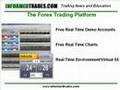
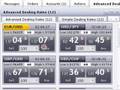
If you're on the market to purchase forex software, selecting the right forex trading program is critical. With so many forex trading companies competing for your business, it can be difficult to choose the right forex trading program. Nearly all of the forex software products out there provide you with platforms for real-time forex trading. So, you'll want to consider other factors that make one type of forex software rise above its competitors.
 Before purchasing any forex software, you will have to make sure that the software has some very important features. Security is the most essential feature, hence online forex trading software ought to have 128 bit SSL encryption. This guarantees that hackers are unable to get at your crucial personal and financial information, eg. account balances and transaction history.
The dandiest forex software should also have 24 hour technical support and maintenance in the event of a problem by the company. Moreover, you'll need to make a point of confirming that the software includes backups of vital info everyday, and that unauthorized account access is not allowed by the security system.
In addition to these critical security procedures, some forex trading companies utilize smart cards and fingerprint scanners for their employees. This is an added security measure than ensures that only employees can access their servers.

Another important thing to consider when choosing forex software is to determine the average length and frequency of the company's downtime. You will want to make sure to choose an online forex trading company and forex software that is reliable and always accessible.
Lastly, you will want to see to it that the forex software you select to help your forex trading has technical support available just in case a session is suddenly cut off. By making sure the forex software you select integrates all of the features mentioned above, you will maximise your security and online forex trading success. - 23309
About the Author:
Before you begin online trading forex, please sign up for John Eather's amazing ecourse and reports about Online Forex Trading. Receivethe latest information about online trading forex. Be sure to visit MoneyMakingFxTrader.com to learn more